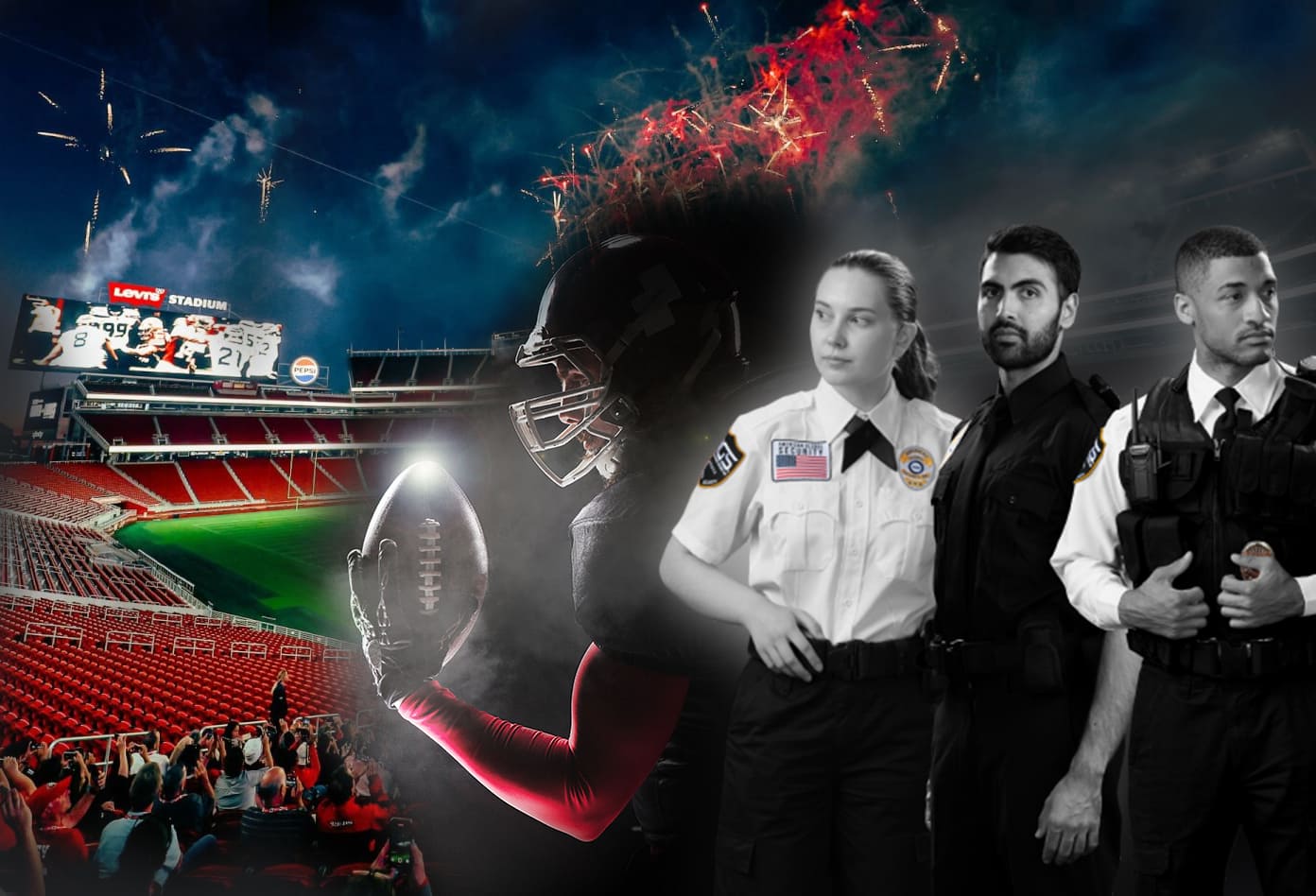
As you approach Levi’s Stadium for the Super Bowl, you see the obvious signs of security: officers directing traffic and staff checking bags. But what you don’t see is the vast, invisible shield of protection—from intelligence analysts miles away to an electronic ‘no-fly’ dome protecting the air above you.
Imagine building a temporary city for 70,000 people, operating it for eight hours, and then making it disappear, all while defending it. This is the essence of the Super Bowl security plan in Santa Clara, a year-long mission involving hundreds of officials that began long before the teams were even decided. These large-venue crowd control techniques are planned to the minute.
For the dozens of agencies coordinating Levi’s Stadium Super Bowl safety measures, success isn’t measured in arrests. A “win” is a quiet day where the game remains the only story, ensuring every fan gets home safely.
What You’ll See at the Gates: The “Why” Behind Levi’s Stadium’s Rules
As you approach the gates, the clear bag policy might seem like a hassle, but it serves two key purposes. It dramatically speeds up security lines and allows staff to spot prohibited items at a glance. This simple rule makes navigating Super Bowl security checkpoints safer and faster for everyone.
You will also see K-9 units, but look closely—some have a unique job. These are “Vapor Wake” dogs, trained to detect explosive particles in the air trailing behind a moving person. This allows them to screen people within the crowd, adding a crucial, mobile layer of security.
Finally, the layout of the screening area itself is deliberately designed. It’s a carefully managed balance between being thorough and preventing dangerous crowd bottlenecks. The goal of these fan safety protocols is to get everyone inside efficiently, keeping the day’s focus on the game, not the gate.
Who’s in Charge? How Hundreds of Agencies Work as One Team
With so many different uniforms on display—from local Santa Clara police to federal agents—a natural question arises: who is actually running the show? The answer lies in a strategy called Unified Command. Think of it as having one head coach for an all-star team. Leaders from dozens of agencies, including the FBI and the Department of Homeland Security (DHS), work side-by-side with local law enforcement to make decisions as a single, cohesive unit. This prevents confusion and ensures a seamless response to any situation.
This massive federal involvement happens because the Super Bowl receives the government’s highest security rating for a public event. This designation unlocks crucial resources and intelligence, making robust counter-terrorism measures a central part of the overall security plan. It transforms the game from a local event into a national security operation.
All of this coordination is centralized in a secure, off-site location called the Joint Operations Center (JOC). This is the high-tech nerve center for the entire event, where representatives from every partner agency watch live video feeds, monitor communications, and direct resources in real-time. It’s the invisible brain ensuring the thousands of personnel on the ground operate as one.
The Unseen Arsenal: What Technology Protects the Stadium?
Beyond the visible security on the ground, an unseen technological shield protects the Super Bowl from modern threats. To guard the airspace, sophisticated drone detection systems create an invisible “no-fly” dome over Levi’s Stadium. If an unauthorized drone enters this protected bubble, officials are instantly alerted and can neutralize the threat, ensuring safety from above.
That protection extends into the digital world as well. Before and during the game, intelligence analysts perform a kind of digital patrol, monitoring public social media channels for any chatter that could indicate a planned disruption or threat. This isn’t about private spying; it’s about finding publicly available clues to stop a problem long before it can reach the stadium gates.
Should an issue arise anywhere across the vast event area, the command structure can go mobile. Specially equipped vehicles, acting as miniature command centers on wheels, can be deployed directly to an incident. This gives decision-makers on-the-ground control, allowing them to manage a response locally while staying connected to the main Joint Operations Center.
A Year of Planning: How Lessons from Past Super Bowls Shape Security
Long before teams are decided, the next Super Bowl’s security plan is in motion. Preparation for Super Bowl LX began the day after the last champion was crowned, a year-long process anchored by the Department of Homeland Security. Designating the game a major national security event unlocks federal resources and expertise months in advance, transforming a one-day event into a 365-day mission.
For Santa Clara, this isn’t starting from scratch. Planners have a detailed playbook from Super Bowl 50, held in the same stadium. They review these past security lessons, analyzing what worked and what didn’t to refine everything from communication to emergency routes. This ensures the strategy constantly evolves, not just repeats, adapting to new challenges based on real-world experience.
By assessing risks months ahead of kickoff, these counter-terrorism measures for sporting events aim to stop a problem before it starts. Protecting the venue is only half the challenge; the other is safely managing the thousands of people inside.